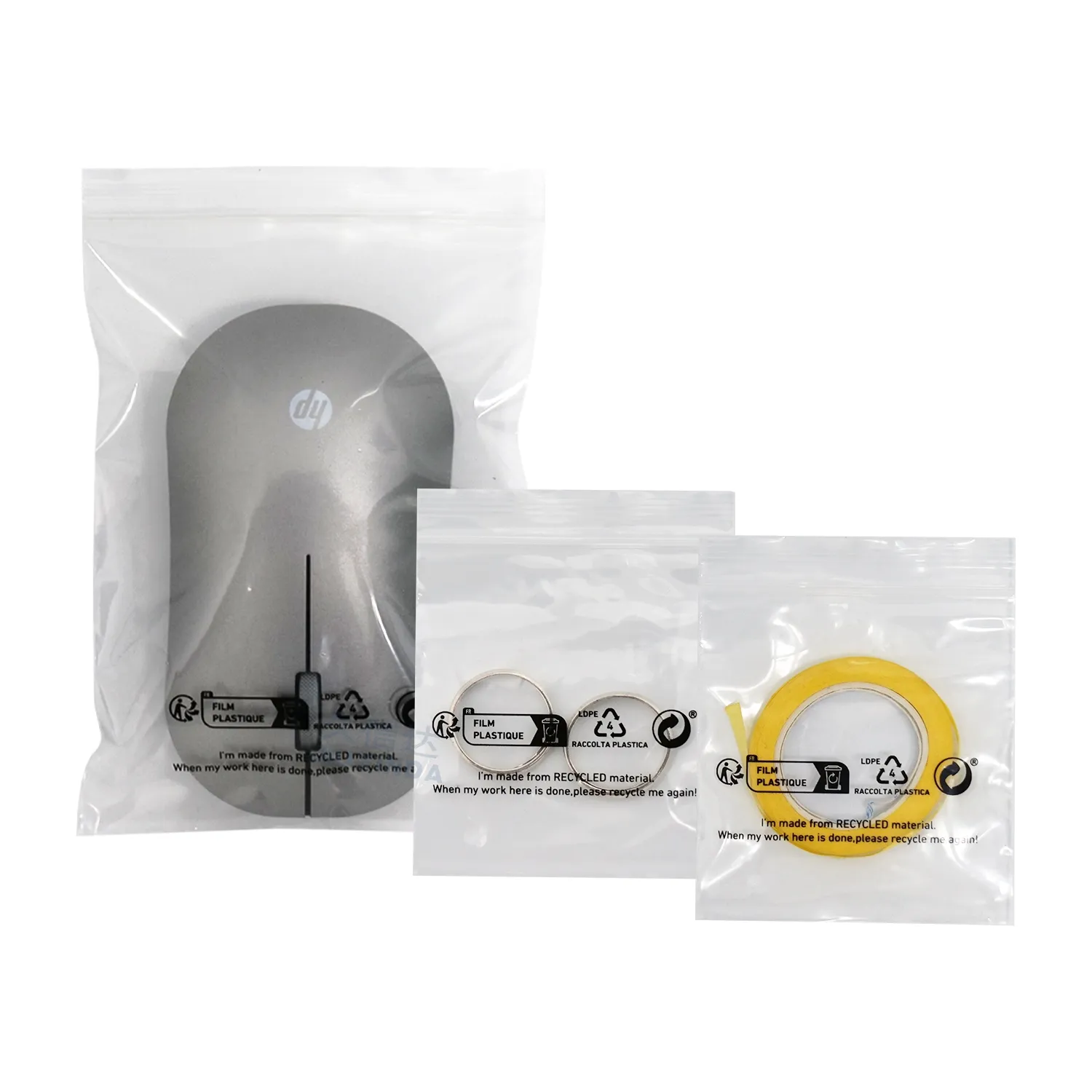
Plastic packaging bags are indispensable packaging supplies for industries including food, daily chemicals, electronics, and logistics. For B2B buyers, selecting a qualified, stable, and cost-effective plastic packaging bag manufacturer is the core of ensuring product packaging quality, stable supply chain, and standardized product compliance. Many procurement failures, such as inconsistent batch quality, delayed delivery, and non-compliant products, stem from unclear screening standards and incomplete information verification of manufacturers. This guide summarizes practical procurement screening logic, clarifies key information to be confirmed with suppliers, and highlights core evaluation dimensions for factory selection, helping buyers avoid procurement risks and establish long-term stable cooperative partnerships.
Key Information You Need to Request from Plastic Packaging Bag Manufacturers
Before formal quotation and order placement, proactive collection and verification of factory core information is the primary step to avoid hidden procurement risks. Many buyers only focus on unit price and ignore fundamental factory qualification and product parameter information, leading to subsequent batch quality problems and compliance risks. The key information that plastic packaging bag manufacturers must provide includes four core modules.
First, basic factory qualification documents. Buyers need to require suppliers to provide business licenses, production qualification certificates, and ISO quality management system certification. For food-grade, medical-grade, and cosmetic plastic packaging bags, manufacturers must provide FDA, REACH, RoHS and other international compliance test reports to prove that the raw materials do not contain harmful substances and meet global market sales standards. Second, product customization parameter details. Manufacturers need to confirm material composition (new pure material or recycled material), bag thickness, size tolerance, printing process, sealing technology, and load-bearing capacity, and provide clear parameter sheets rather than vague verbal descriptions.
Third, production and supply-related information. This includes daily production capacity, minimum order quantity (MOQ), conventional production cycle, and peak season delivery guarantee measures. Meanwhile, buyers need to ask for raw material sourcing certificates to confirm the stability and safety of plastic particle materials. Fourth, after-sales and service terms. It is necessary to clarify the defective product replacement mechanism, order adjustment rules, sample making cycle and cost, and long-term order price adjustment policies, so as to form a standardized service agreement for subsequent cooperation constraints.
Scientific Steps to Screen and Select Plastic Packaging Bag Factories
Screening plastic packaging bag manufacturers is not a one-time price comparison, but a systematic evaluation process combining qualification, capability, and service. A scientific selection process can effectively eliminate unqualified middlemen and low-quality small factories and improve the success rate of procurement cooperation.
The first step is preliminary qualification screening. Eliminate factories with incomplete qualifications, no formal production workshops, and no third-party quality inspection reports. Prioritize source production factories rather than trading companies, which can avoid intermediate price markups and ensure controllable production processes. The second step is sample verification and testing. After confirming that the qualifications meet the standards, buyers need to apply for physical samples of plastic packaging bags, and conduct actual tests including tensile resistance, drop resistance, sealing tightness, and printing firmness to verify whether the product performance meets actual packaging and transportation needs.
The third step is on-the-spot investigation or video factory audit. For bulk long-term orders, it is essential to check the factory’s production equipment, workshop management, quality inspection process, and inventory management system. Factories with automated production lines and standardized quality inspection processes have far more stable batch consistency than small manual workshops. The fourth step is trial order verification. Before signing long-term cooperation contracts, place small-batch trial orders to inspect the manufacturer’s delivery speed, product batch consistency, and after-sales response efficiency, so as to comprehensively verify the factory’s comprehensive service capability.
Core Evaluation Dimensions for Reliable Plastic Packaging Bag Manufacturers
Excellent plastic packaging bag manufacturers have standardized performance in multiple core dimensions. Buyers need to abandon the single price-oriented evaluation standard and focus on comprehensive strength that affects long-term cooperation value.
The first dimension is stable product quality control. Reliable factories have a complete quality inspection system, with special personnel responsible for raw material incoming inspection, semi-finished product process inspection, and finished product outgoing inspection. They can provide batch test reports for each order, with low defective rate and stable product thickness, color, and performance of each batch. They strictly use standardized new plastic materials to avoid odor, easy breakage, and unqualified safety indicators caused by recycled materials.
The second dimension is flexible customization capability. Excellent manufacturers can meet personalized needs such as special size adjustment, diversified printing styles (matte, glossy, hot stamping, embossing), and functional upgrades (anti-static, waterproof, moisture-proof, degradable). They have professional design and technical teams to optimize packaging solutions according to buyers’ product characteristics and market positioning.
The third dimension is scalable production capacity. Formal factories have complete production equipment and sufficient production reserves, which can not only meet conventional small-batch orders, but also quickly respond to large-batch emergency orders, effectively avoiding delivery delays caused by insufficient capacity. The fourth dimension is standardized credit and service. High-quality manufacturers have transparent quotation mechanisms, no hidden charges, flexible order adjustment policies, and efficient after-sales teams that can quickly respond to and solve product quality and delivery problems.
Long-Term Cooperation Value Beyond Product and Price
In plastic packaging bag procurement, many buyers only focus on unit price and ignore the long-term comprehensive cost and cooperation value brought by high-quality manufacturers. Reasonable factory selection can effectively reduce comprehensive procurement costs and bring sustainable value to brand operation.
First, reduce comprehensive operational risks. High-quality plastic packaging bags with stable quality can avoid product damage, leakage, and customer complaints caused by packaging problems, reducing after-sales compensation and brand reputation losses. Standard compliant products can also help buyers smoothly pass market supervision and customs inspection, avoiding sales stagnation caused by non-compliant packaging.
Second, optimize supply chain efficiency. Reliable manufacturers have stable delivery cycles and perfect docking processes, which can help buyers realize inventory planning and orderly production arrangement, avoid material shortage shutdown or inventory backlog, and greatly improve the overall operational efficiency of the enterprise.
Third, support brand upgrading and innovation. Excellent packaging manufacturers can continuously provide new process and new material solutions, such as environmentally friendly degradable plastic bags, high-definition color printing packaging, and personalized structural design, helping buyers optimize product packaging image, enhance market competitiveness, and realize brand differentiation operation.
Selecting a suitable plastic packaging bag manufacturer is a key link in enterprise packaging procurement and supply chain management. Buyers need to take standardized information verification as the premise, scientific screening process as the method, and comprehensive factory strength as the core, abandon single low-price thinking, and select compliant, stable, and innovative cooperative manufacturers. Only in this way can we ensure the stability of packaging quality, standardization of procurement links, and sustainable appreciation of long-term cooperative value.