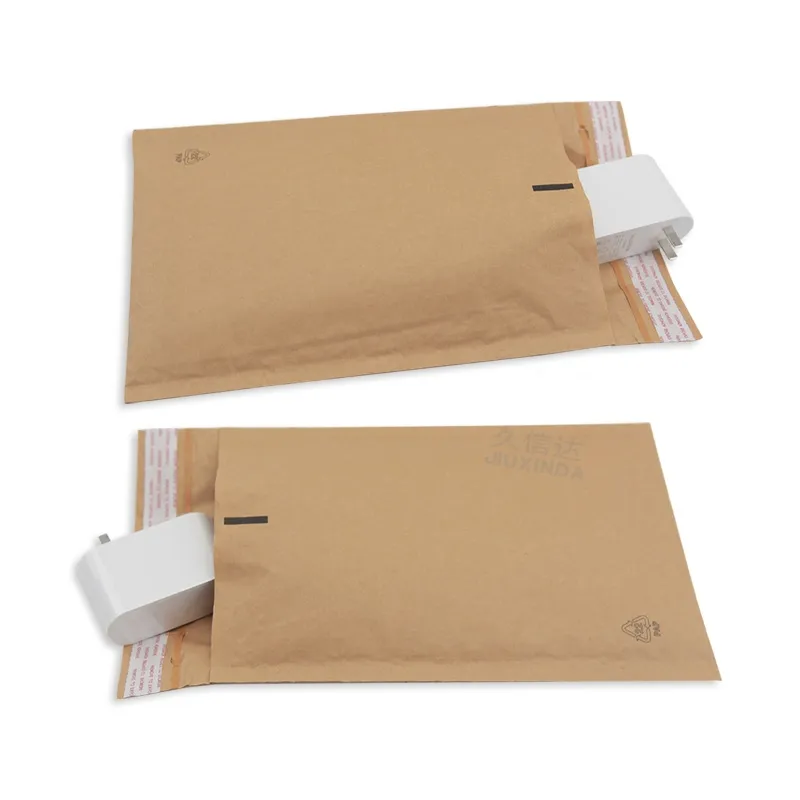
Kraft mailers have become a mainstream shipping and packaging solution for e-commerce brands, apparel stores, gift businesses, and small commodity distributors. Favored for their lightweight design, eco-friendly attributes, sturdy texture, and cost-saving shipping advantages, they replace bulky cartons and flimsy plastic packages for daily shipping needs. For global B2B buyers, understanding kraft mailer materials and mastering supplier selection skills is key to avoiding inconsistent quality, poor shipping protection, and mismatched packaging solutions. This article combines real procurement pain points to introduce core material knowledge, practical manufacturer selection methods, and critical purchasing notes.
Core Material Knowledge of Standard Kraft Mailers
Most buyers only know kraft mailers are paper-based packages but fail to distinguish different material configurations, which leads to wrong packaging choices for their shipping scenarios. Commercial kraft mailers are mainly divided into two mainstream material types with distinct performance and application ranges.
Traditional uncoated kraft mailers are made of pure natural kraft paper pulp, featuring high toughness, good tear resistance, and 100% recyclable and biodegradable properties. With a classic matte brown texture, they present a minimalist and eco-brand look. This material is lightweight, flexible, and ideal for flat items such as clothing, stickers, documents, and soft accessories. However, uncoated kraft paper is not waterproof and is prone to moisture damage in humid shipping environments.
Poly-lined kraft mailers adopt a composite structure of outer kraft paper and inner polyethylene lining. The inner PE layer provides excellent waterproof, dustproof, and tear-proof performance, greatly improving shipping durability. This upgraded material can resist friction, rainwater, and extrusion during long-distance logistics, suitable for fragile small goods, cosmetics, jewelry, and electronic accessories. In addition, premium manufacturers use virgin wood pulp instead of recycled pulp, making the mailer surface smoother, tougher, and free of paper dust and impurities.
Practical Criteria to Choose Qualified Kraft Mailer Manufacturers
The kraft mailer industry has low entry barriers, resulting in uneven factory capabilities. Many small factories cut corners on paper thickness, glue quality, and lining uniformity, causing frequent shipping damage issues. Buyers need to adopt targeted screening standards different from ordinary packaging suppliers.
First, prioritize manufacturers focusing on courier-grade kraft mailer production. Professional factories specialize in packaging for e-commerce logistics, with mature production lines for paper cutting, composite bonding, self-adhesive sealing, and precise printing. Their products strictly follow logistics anti-collision and anti-tearing standards, unlike general paper product factories that lack logistics-oriented process optimization.
Second, verify raw material sourcing and production stability. Reliable suppliers consistently use standard virgin kraft pulp and high-quality PE lining materials, with fixed material thickness standards for each product specification. They maintain stable tension during composite processing to avoid delamination, bubbling, and uneven fitting. Buyers should avoid factories that randomly replace raw materials to reduce costs between batches.
Third, check customization and mass-production capacity. Excellent manufacturers support personalized sizes, custom printed logos, brand pattern printing, and customized adhesive strength. They can flexibly handle small-batch customized orders and large-volume wholesale orders, ensuring consistent color, printing clarity, and overall texture across all batches.
Key Inspection Items Before Confirming Bulk Orders
To eliminate procurement risks, buyers must complete detailed sample testing and qualification confirmation before placing mass orders. These easily overlooked details directly determine the practical performance of kraft mailers in actual shipping scenarios.
First, test sealing and adhesion performance. High-quality kraft mailers adopt strong permanent self-adhesive glue, which features high viscosity, firm bonding, and no opening during extrusion and transportation. Buyers need to simulate repeated friction and extrusion to check for glue failure, edge warping, or opening problems. Meanwhile, confirm the glue is non-residue and eco-friendly, meeting international shipping standards.
Second, inspect physical protection performance. Test the tear resistance and tensile strength of the mailer. Qualified kraft mailers cannot be easily torn by external force, and the composite layer will not separate. For poly-lined models, conduct waterproof tests to ensure no water penetration after surface water splashing, protecting internal products from moisture damage.
Third, check appearance and workmanship details. Standard products have neat cutting edges, no burrs, uniform paper color, smooth surface, and clear printing without ghosting or color deviation. Unqualified products usually have rough edges, paper dust, uneven lining, and blurred printing, which seriously affect brand packaging grade.
Critical Long-Term Procurement Precautions for Buyers
For long-term bulk procurement of kraft mailers, buyers need to focus on sustainable cooperation and cost-performance balance, avoiding common industry traps that affect stable supply chain operation.
Avoid low-price inferior traps. Some manufacturers reduce costs by using recycled pulp, thinning paper thickness, or using inferior glue. Such low-cost mailers are prone to cracking, water leakage, and glue opening during shipping, leading to product loss, customer complaints, and damaged brand reputation. Always balance price with quality standards rather than pursuing the lowest quotation blindly.
Confirm batch consistency and delivery stability. E-commerce shipping has strong seasonal fluctuations and urgent order demands. Reliable manufacturers have standardized production schedules and sufficient inventory reserves to ensure on-time delivery and zero batch difference for repeated orders. They will not adjust materials or processes arbitrarily to shorten production cycles.
Clarify after-sales and replacement policies. Before long-term cooperation, confirm the defective product replacement ratio, rework cycle, and compensation rules for quality problems. Formal manufacturers provide complete after-sales support for unqualified products such as poor adhesion, delamination, and defective printing, ensuring zero loss for buyers.
Kraft mailers are practical, eco-friendly, and cost-efficient shipping packaging solutions for modern e-commerce businesses. Successful procurement starts with clear material selection, strict manufacturer screening, professional sample testing, and standardized long-term cooperation rules. By choosing professional and stable kraft mailer manufacturers, buyers can optimize packaging costs, improve shipping safety, and build a consistent and high-end brand packaging image.